
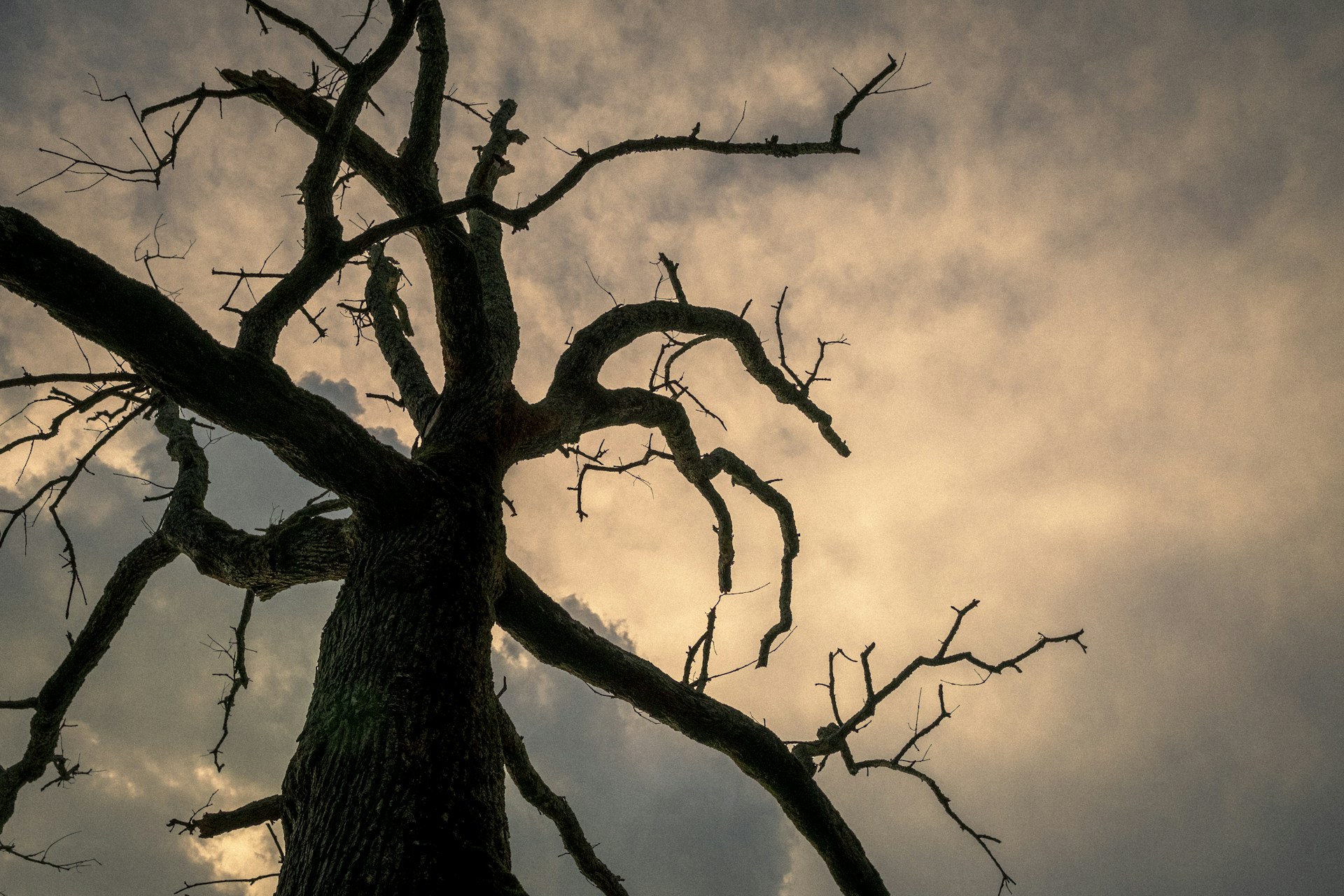
When Dead Trees Turn From Eyesore to Emergency
A dead tree is more than just an ugly spot in your yard. Once a tree stops moving water and nutrients through its system, the wood dries out and weakens, and the whole tree can become unpredictable. In Tennessee, where storms, heat, and heavy rain can show up fast, a tree that looked “mostly fine” last month can turn into a real danger before you know it.
It can be hard to tell the difference between a tree that is simply dormant and one that is truly dead or failing. Dormant trees still have flexible twigs, tight bark, and healthy buds. Dead trees have brittle branches, peeling bark, and no signs of life during the growing season. Waiting too long on dead tree removal in Tennessee can lead to falling limbs, full tree failure, damage to homes and power lines, and real safety worries for anyone nearby. In this article, we will walk through the danger signs, how local weather makes things worse, and when it is time to bring in a professional crew in areas like Brentwood and Murfreesboro.
Clear Warning Signs a Dead Tree Can’t Wait
Some trees can be watched for a while, but others are on borrowed time. The trick is knowing which is which. The trunk, canopy, and roots all tell part of the story.
Watch for these structural red flags in the trunk and main limbs:
- Deep cracks that run vertically or spiral around the trunk
- Large hollow spots or cavities, especially near the base
- A lean that has suddenly gotten worse or new soil pushed up on one side
- Big areas of missing or loose bark
- Mushrooms or hard fungal growths at the base of the trunk
In the canopy, trouble usually shows up as:
- Many bare branches with no leaves at all during the growing season
- Branches that snap off easily with a light touch, instead of bending
- Large dead limbs hanging directly over roofs, driveways, playsets, patios, or parking lots
Root and soil issues are easier to miss, but just as important. Heaving soil on one side, roots that are exposed and soft, or roots that crumble when pressed are warning signs that the tree has lost its anchor. In that condition, it may only take the next strong wind for the whole tree to uproot. When you see several of these signs at once, especially near buildings or high-traffic spots, the tree usually cannot wait until “later in the year” to be removed.
How Tennessee Weather Makes Waiting Risky
In Middle Tennessee, weather keeps trees under constant stress. That is part of why dead tree removal in Tennessee often cannot be put off once a tree starts to fail.
During fall, strong thunderstorms and quick wind gusts can roll through ahead of cold fronts. We also see leftovers from tropical systems that can bring long periods of rain and gusty winds. Dead or weakened trees are much more likely to snap or drop limbs during these events, sometimes just before or during leaf drop when the extra weight adds stress.
Winter and early spring bring their own problems. Ice can build up on old branches, adding heavy weight in just a few hours. At the same time, the clay-heavy soil common around Brentwood, Murfreesboro, and nearby areas can stay saturated for days. Wet soil holds roots less firmly, especially when those roots are already decayed, so trees can tip or uproot with less wind than you might expect.
The mix of hardwood species in local neighborhoods, along with these soil and weather patterns, means that a tree with root or trunk problems might stand for months or fail the very next storm. That is why waiting to deal with a clearly dead tree is such a big gamble.
Safety and Liability Dangers You May Not Expect
Most people notice a dead tree because it looks bad. What many do not think about right away is how dangerous that tree can become for the people around it.
Personal safety is the first concern. Weak limbs can fall without warning on:
- Kids playing in the yard
- Guests walking up a front path
- Employees or customers heading to a front door
- Anyone parking or unloading near the tree
Property and utility damage is the next big risk. Dead branches cracking off in a storm can:
- Tear down power or communication lines
- Punch holes in roofs or gutters
- Crush fences, sheds, vehicles, or mailboxes
- Land on decks, porches, or HVAC units
There is also the question of liability. When a tree is clearly dead, leaning badly, or dropping limbs, it becomes harder to say the damage was unexpected. If that tree falls onto a neighbor’s house or injures someone after you have seen the warning signs for months, you may be viewed as having ignored a known hazard. That can make any cleanup, repairs, or legal issues much more stressful.
When DIY Is Too Dangerous and Pros Are Essential
Cutting down trees might look simple in videos, but dead trees behave very differently from healthy ones. The wood can break in odd ways, and internal decay is often hidden from the outside. Once you add in nearby roofs, fences, and power lines, the risk climbs even higher.
Climbing or cutting a dead tree on your own are usually unsafe because:
- Branches may snap under your weight without warning
- The trunk may be hollow or rotten where you plan to cut
- Limbs can swing or drop in unexpected directions
- Professional rigging gear and experience are needed in tight spaces
A professional assessment takes a closer look at the entire situation. Trained crews study the tree’s structure, lean, bark condition, roots, and the targets below it. From there, they decide how urgent the removal is, where to make cuts, how to lower branches safely, and what equipment is best for the job.
At Greenway Tree Service, we handle urgent removals in residential yards and commercial spaces across the Brentwood and Murfreesboro area. We use specialized equipment to work in tight backyards and near buildings, and we plan our removals to protect lawns, driveways, and nearby landscaping as much as possible while keeping everyone safe.
Plan Ahead Before Storm Season Strikes Again
The best time to deal with a dangerous tree is before the next round of strong weather shows up. Many homeowners and business owners find that late summer into early fall is a smart window for professional tree inspections and planned removals, before the windiest months and winter storms arrive.
A simple plan for keeping your property safer includes:
- Regular tree health checks by a professional crew
- Trimming or pruning to remove weak or overhanging limbs
- Removing trees that are clearly failing before they die completely
- Paying special attention to trees near structures, play areas, and parking spaces
Preventive care usually means fewer emergency calls at night or during storms, fewer surprises, and less disruption to your daily life. For anyone in Brentwood, Murfreesboro, or nearby Tennessee communities, a tree safety review from Greenway Tree Service can help you understand which trees are fine to watch and which ones should move to the top of your to-do list before the next big storm rolls through.
Protect Your Property With Expert Dead Tree Removal
If you are concerned about a hazardous or decaying tree on your land, our team at Greenway Tree Service can help you resolve the issue safely and efficiently. Learn more about our professional dead tree removal in Tennessee so you can prevent damage and keep your landscape healthy. When you are ready to schedule an assessment or get a quote, simply contact us and we will walk you through the next steps.